COMPOSE – Composable Operational Microfactory Platform for Smart Enterprises
Addressing the growing need for scalable, interoperable and rapidly reconfigurable digital twins that reduce integration effort and accelerate time-to-value
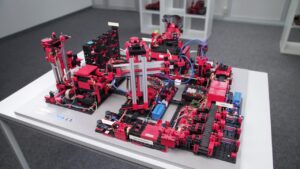
The COMPOSE testbed showcases a modular and scalable approach to digital twin architectures for asset-intensive industries. Built around a physical microfactory that replicates real industrial operations in a controlled environment, COMPOSE demonstrates how vendor-agnostic, composable architectures can accelerate the validation of new digital twin solutions without requiring the redesign of complete systems.
The testbed connects machines, sensors, AI-powered predictive analytics and software through common industrial standards, enabling continuous data collection and practical experimentation with digital twin solutions. Its composable, vendor-agnostic architecture lets you integrate and reconfigure technologies as modular components, enabling the ability to test and validate new capabilities quickly. This approach is especially valuable for industries such as manufacturing, mining, utilities, and oil & gas, where operational visibility, early fault detection, and process optimization deliver measurable business value.
COMPOSE also functions as a collaborative ecosystem within the community. The microfactory provides real industrial data and a shared testing environment where members can integrate their own technologies, build use cases, and evaluate how their solutions perform in combination with others. New contributors are welcome to join and enrich the testbed, supporting cross-industry alignment and opening the door to further collaboration opportunities.
The COMPOSE Testbed aims to contribute to industry advancement in the following ways:
- Faster Deployment: Demonstrating faster deployment of digital twins by validating reusable architectural components that can be applied across multiple use cases, reducing the time organizations need to stand up new digital twin solutions and helping establish reusable design patterns for the broader community.
- Reduced Integration Complexity: Through a vendor-agnostic, composable architecture, COMPOSE reduces the integration complexity organizations typically face when connecting machines, sensors, and software from different vendors, offering a validated approach to interoperability that lowers technical barriers to adopting digital twin technology.
- Cross-Industry Applicability: Enabling organizations across manufacturing, mining, utilities, and oil & gas to test use cases that advance data-driven, efficient operations, offering a clear and repeatable pathway to scalable digital twin adoption that extends beyond any single industry vertical.
- Lower Experimentation Risk: By allowing technologies to be validated within the microfactory before full-scale implementation, COMPOSE lowers the risk and cost of experimentation, giving members a controlled environment to test new digital twin capabilities before committing to production-scale deployment.
- Industry Standards Contribution: Insights generated through COMPOSE feed directly back into industry frameworks addressing OT/IT convergence and interoperability, helping advance shared standards and best practices that support the broader digital twin community as it works toward more consistent, interoperable implementations.
Lead Developer

Co-Developers